
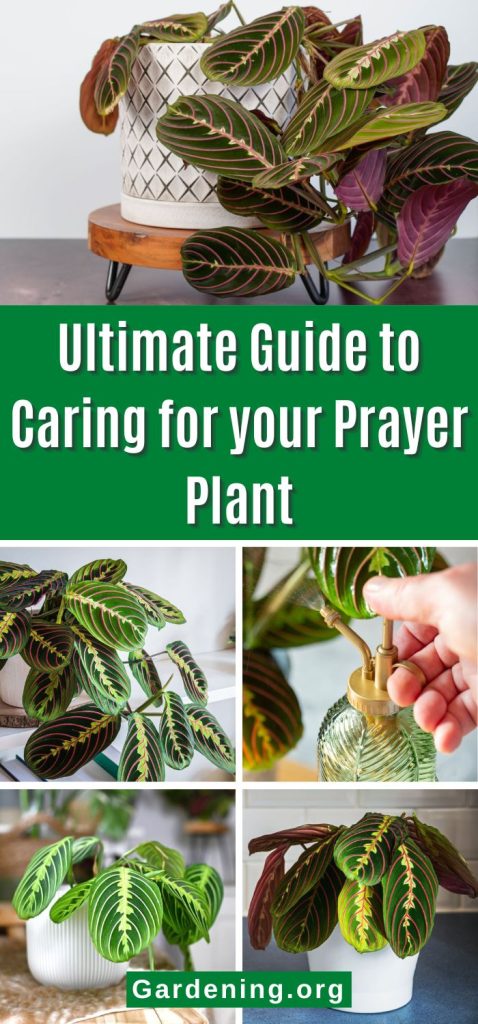
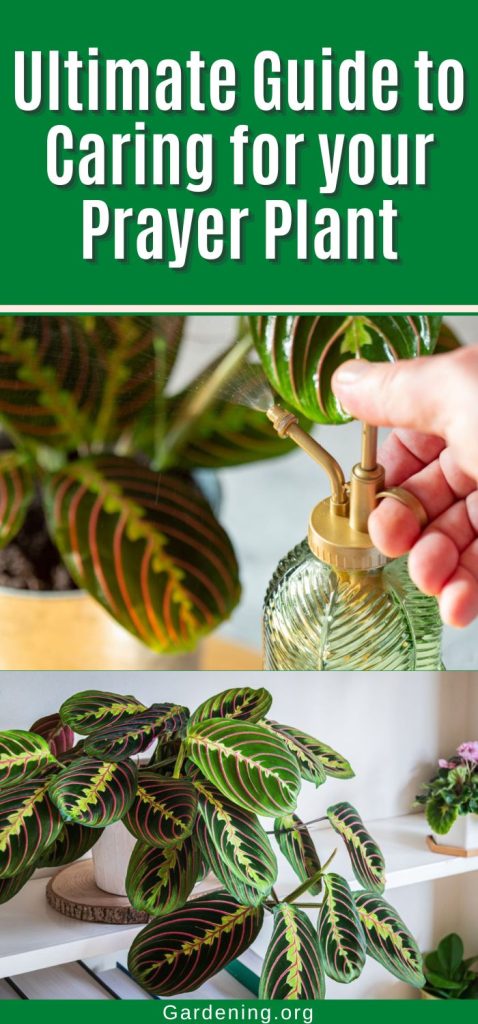
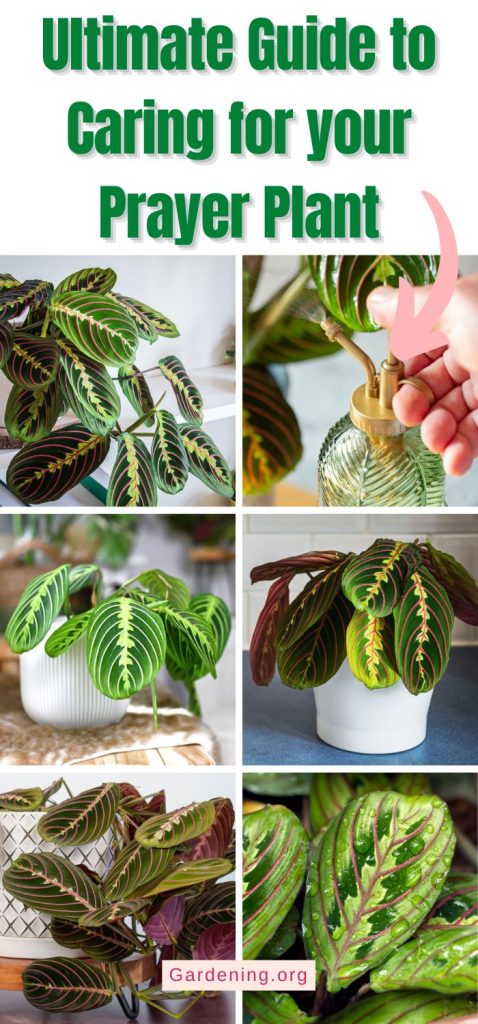

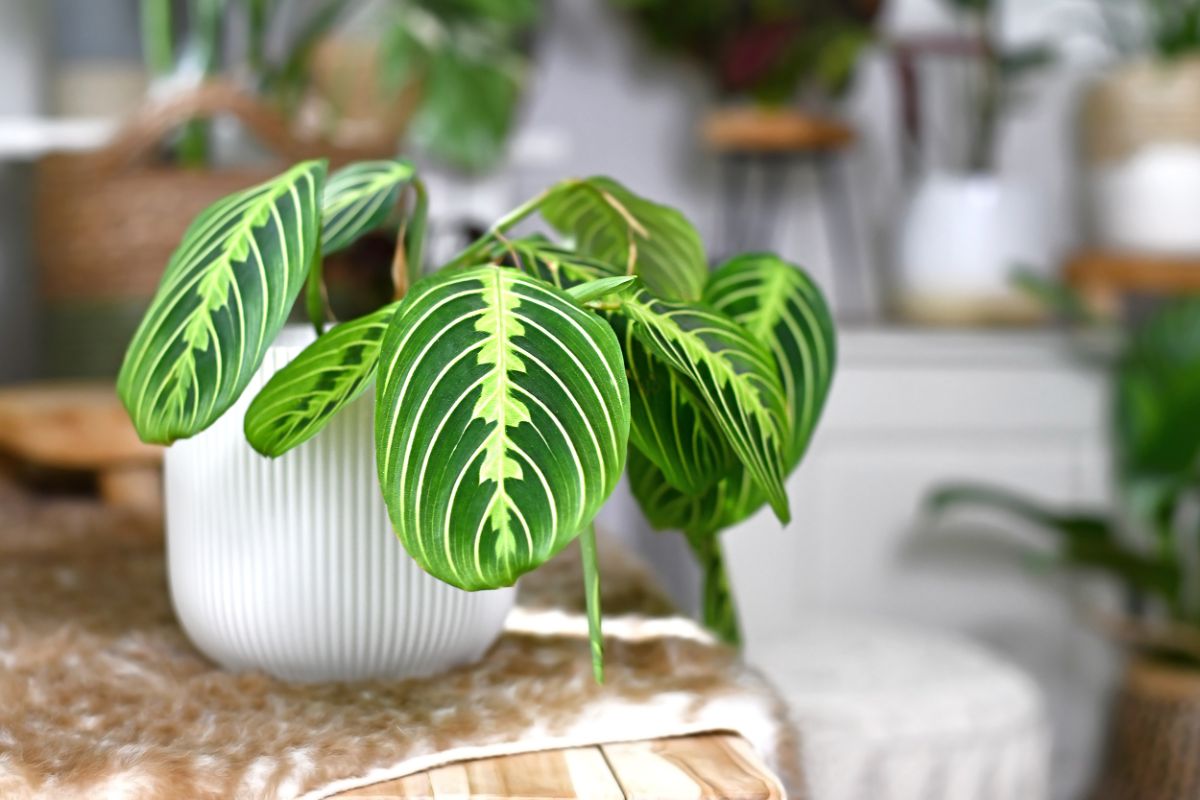
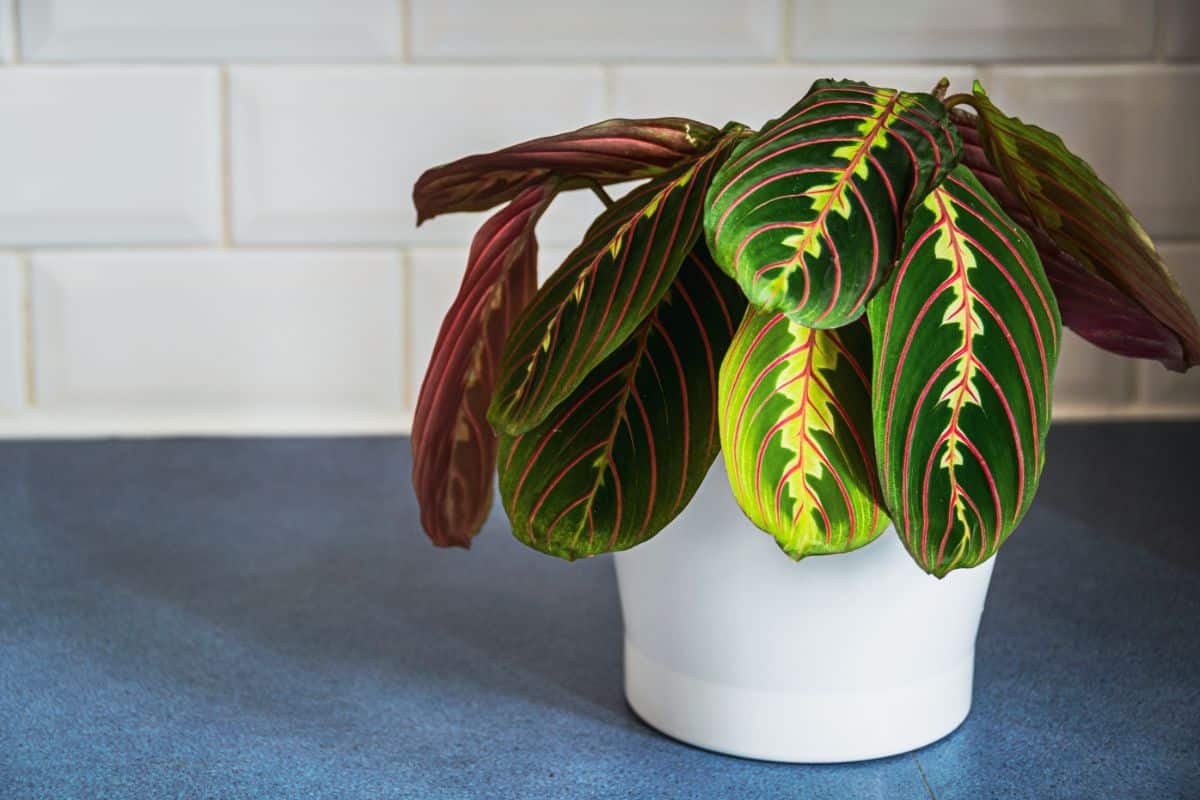
Prayer plants (Maranta leuconeura) are tropical houseplants that belong to the Maranta genus, which is named after the famous 16th century Italian botanist Bartolomeo Maranta. Prayer plants are one particularly popular species of Maranta that is prized for its multi-colored leaves that feature yellow splotches and red veining on a bright green leaf surface.
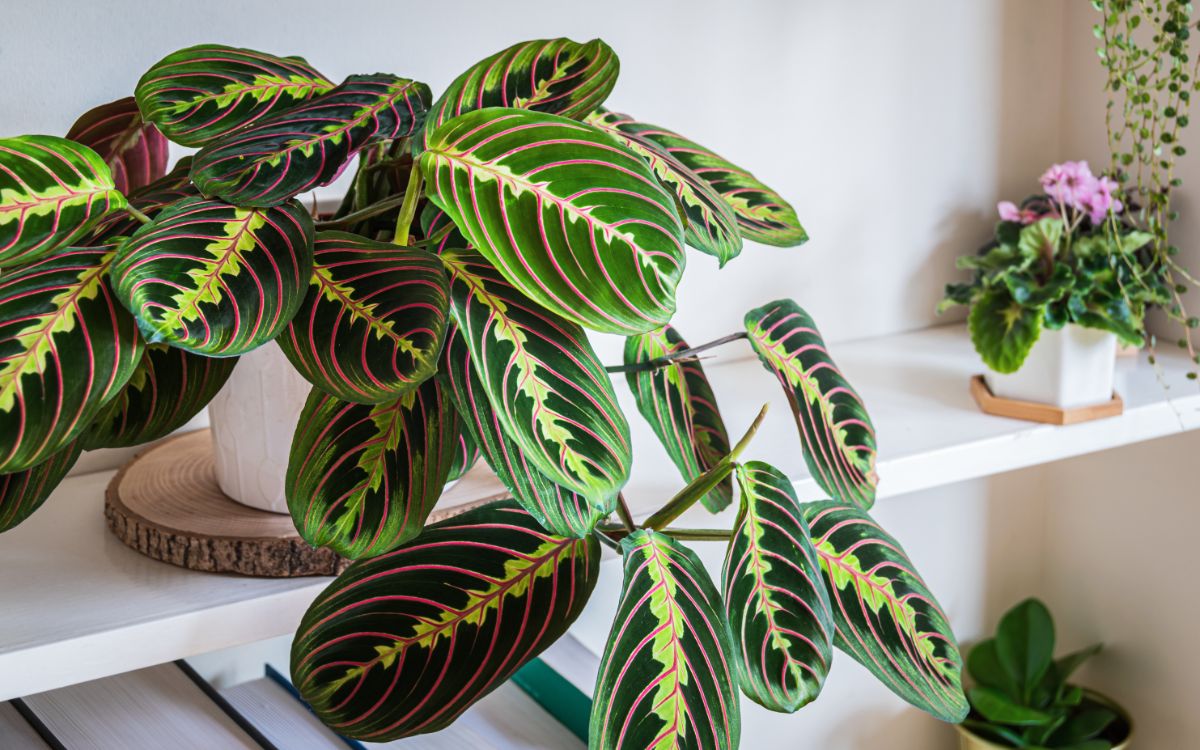
Prayer plants’ striking leaves aren’t just famous for their coloration – they also move! Prayer plant leaves turn upwards in the evening to conserve moisture; however, this movement is said to look like hands at prayer. And for even more color and interest, prayer plants also flower pretty purple blooms!
While prayer plants are known to be easy to keep and beginner friendly, this guide will teach you everything you need to know to keep your prayer plant happy and thriving for years to come.
Jump to:
How to care for your prayer plant
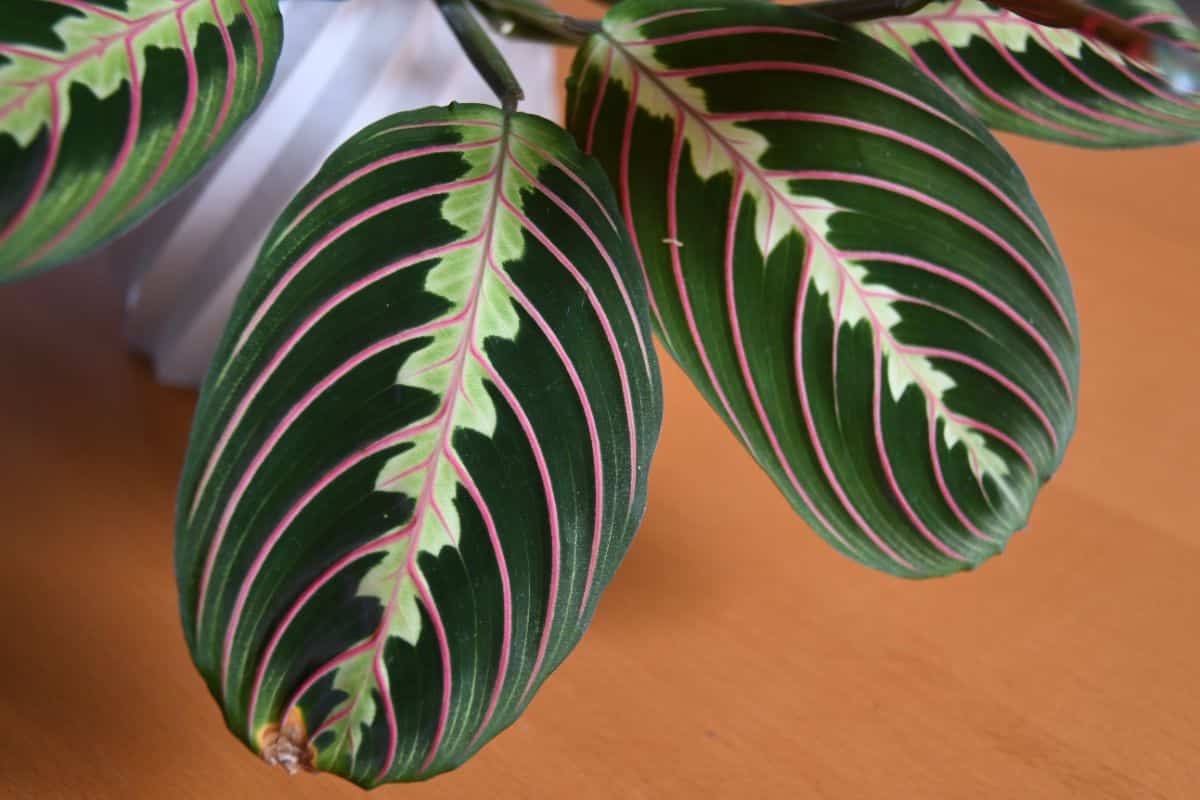
| Plant name: | Prayer plant |
| Scientific name: | Maranta leuconeura |
| Other names: | Red maranta, cathedral windows, herringbone plant |
| Native range: | Brazil |
| Growing zone: | Zones 10 to 12 |
| Light requirements: | Bright, indirect light to medium light |
| Water requirements: | Moderate |
| Size: | Up to 1’ high by 18” wide |
| Bloom color: | Purple |
| Toxic? | No |
Prayer plants are undemanding houseplants that can tolerate a range of growing conditions. However, it’s important to try to replicate this plant’s natural environment as much as possible in order to grow it successfully.
Growth habit
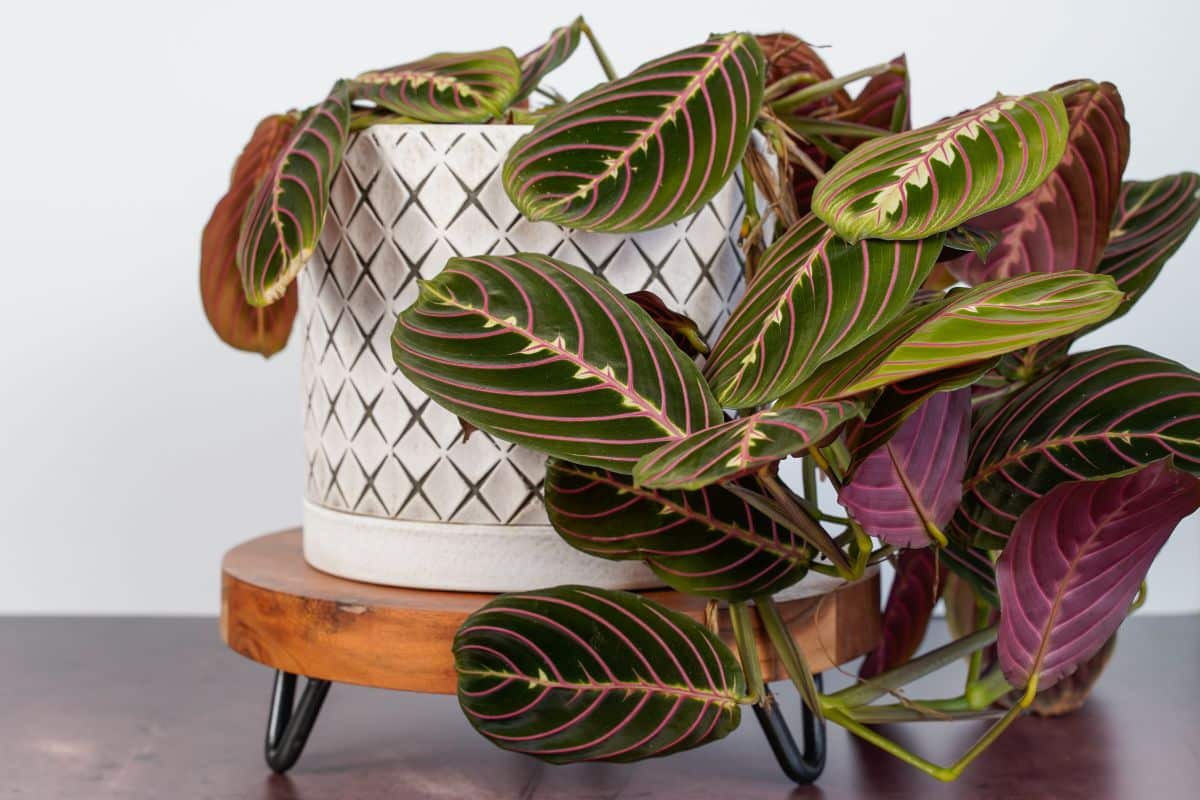
Prayer plants are native to the tropical forests of Brazil. In nature, these plants can be naturally found growing across the forest floor. As houseplants, prayer plants tend to spread and grow and can develop trailing, leafy growth that looks very attractive in both tabletop planters and hanging baskets.
When fully mature, prayer plants will grow to about 1’ in height, but they can spread 18” wide.
Light
In the wild, prayer plants are understory plants and grow in dappled light. As houseplants, prayer plants prefer bright, indirect light, but they can also tolerate some shade.
Prayer plants can be sensitive to light, and they should never be kept in full sun. Too much bright light can cause prayer plants’ colorful leaves to fade or develop unsightly spotting. Bright sun can also produce leaf scorching and crispy leaf margins.
In winter, prayer plants will enter a state of dormancy, and growth will slow. Providing your plants with additional light at this time of the year can encourage your prayer plant to continue to grow.
Water
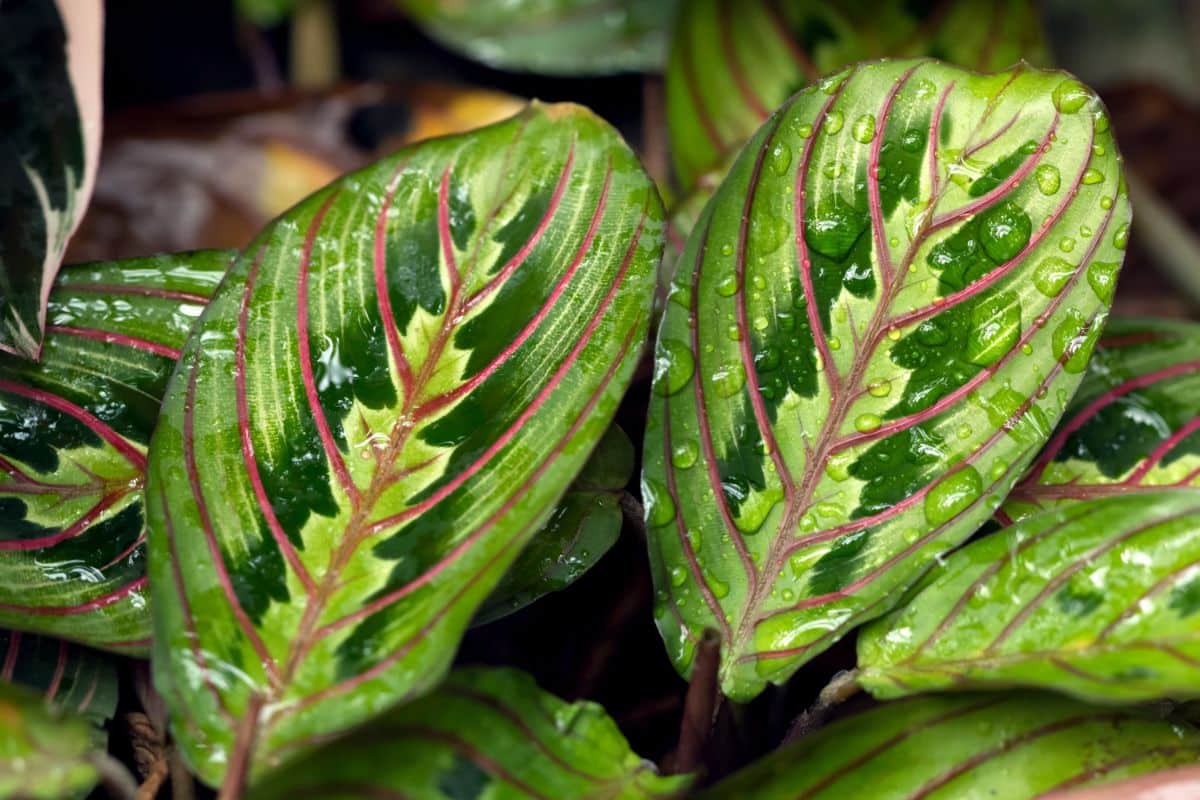
As prayer plants can be sensitive to both overwatering and underwatering, moderation is key when keeping these plants. Water your prayer plant only when the top 1 to 2” of soil feels dry to the touch, and allow excess water to flow out of your plant’s pot to avoid waterlogged roots. Prayer plants cannot handle drought conditions, so your potting mix should never be allowed to dry out completely.
During the winter, as your plant enters a state of dormancy, plan to reduce your watering slightly because your plant won’t need as much water at this time of the year.
Temperature and humidity
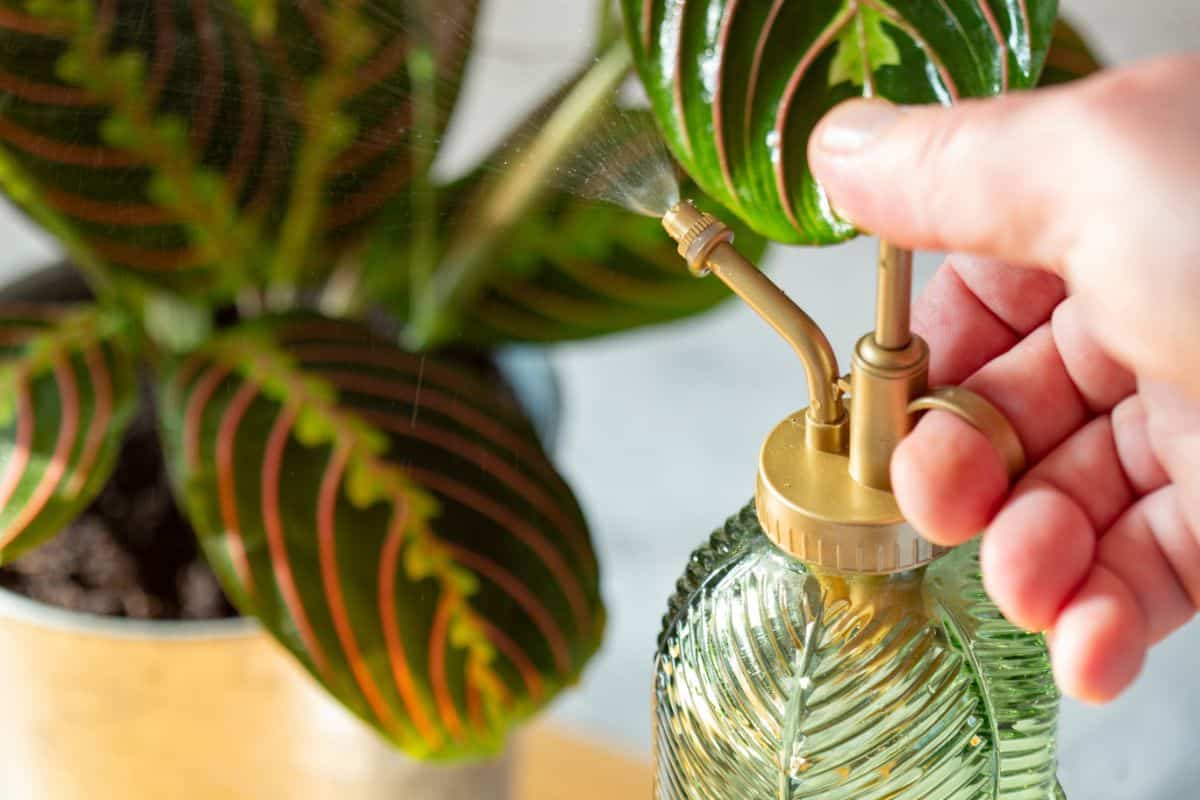
Prayer plants will grow well at average room temperature; however, they do need extra humidity to grow properly.
As tropical plants, prayer plants grow best when humidity levels are at least 50%. Since most homes have indoor humidity levels of around 30 to 40%, you may want to boost humidity around your plant by adding a pebble tray under your prayer plant’s pot. Humidifiers can also be installed near your prayer plant to ensure your plant receives enough moisture.
Soil and repotting
Prayer plants don’t need to be repotted often, but if your plant appears to be rootbound or its growth rate has slowed, it may be time to upgrade your pot. Aim to repot your prayer plant when it’s actively growing in spring or summer. It’s also important to choose a plant pot that has drainage holes, and that’s only 1 to 2 sizes larger than your existing pot, as oversized pots may cause issues with watering and drainage.
Prayer plants can be grown in a standard potting mix suitable for houseplants. Just make sure your soil is rich and well-draining, and it should have a slightly acidic pH of around 6.0. If needed, you can make your own soil by mixing 2 parts sphagnum peat moss with 1 part loamy soil and 1 part perlite.
Fertilizer
Prayer plants can be fertilized throughout the growing season (spring through fall) with a liquid, organic fertilizer diluted to half strength. This fertilizer application can be applied once or twice a month to boost your plant’s growth.
Too much fertilizer can burn your prayer plant’s roots, while insufficient fertilizer will result in a stunted plant that grows slowly.
Pruning
You don’t generally need to prune prayer plants, but you can shape them from time to time to improve their appearance if you want to.
When you first purchase your prayer plant, it will likely have a more vertical appearance as it was probably propagated from a stem cutting. However, as these plants mature, they naturally begin to sprawl and spread. Since this is the natural way these plants grow, it’s not recommended to try to keep your prayer plant from spreading, but you can prune wayward stems to promote a more compact look.
Yellowed leaves and damaged stems should also be pruned away to redirect your plant’s energy to new growth. And, of course, always be sure to prune your prayer plant with a sharp and sterilized knife or pair of scissors.
Toxicity
Prayer plants are non-toxic. That’s great news for pet owners!
Prayer plant propagation
Prayer plants can be propagated in several different ways, such as with root division and stem cuttings.
Stem cuttings can be taken when you prune your prayer plant to improve its appearance. Make sure your cuttings have at least one node. Cuttings can be placed in water or dipped in rooting hormone and planted in soil until roots develop.
Alternatively, you can also divide your prayer plant when you’re repotting it. To do this, simply shake away excess soil and carefully tease your plant’s root ball apart. It should separate easily.
When you divide your plant, make sure each section has a well-developed root ball and several leaves. After that, just pot up your new prayer plants in individual pots and tend them as normal.
Common issues
Although prayer plants are relatively easy to care for, problems may still occasionally arise. Below are some of the most common issues you may encounter when keeping prayer plants and what to do about them.
Scale and mealybugs
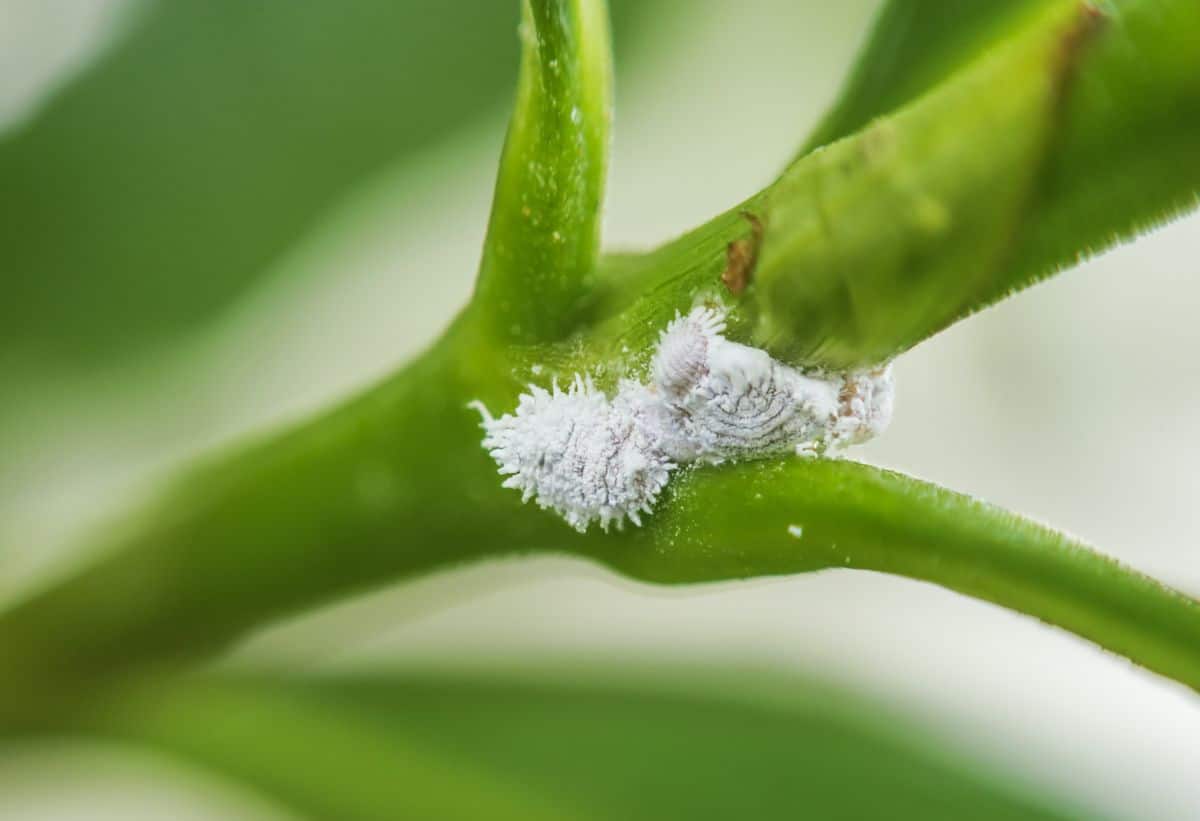
Hard bodied scale look like small, brown bumps on plant leaves and stems, while mealybugs are fluffy and white and have a cottony appearance. Both of these pests feed on plant sap and can weaken your prayer plant if you don’t act fast.
To treat for scale and mealybugs, spray your prayer plant every 7 to 10 days with an organic insecticidal soap or neem oil spray. Repeat the treatment one more time after all signs of infestation are gone just to be safe.
Spider mites
Spider mites are small insects that form webbing over houseplant leaves and feed on plant sap. As infestations progress, infected plants begin to develop a dull and dry appearance and may look underwatered. If you don’t treat spider mites, your plants will eventually weaken and die.
Treatment for spider mites is much the same as how you would address an infestation of scale or mealybugs. Spray your plants every 7 to 10 days with a neem oil or insecticidal soap spray.
If you want, you can make your own insecticidal soap spray by adding a small squirt of Castile soap to a quart of water and then mix in a tablespoon or two of neem oil. Stir well and apply to your prayer plant after the sun sets in the evening to avoid issues with leaf burn.
Yellowing leaves
Yellowing leaves on your prayer plant can be caused by several different issues. Overwatering and nutrient deficiencies are the most likely cause of this problem. However, some pests or too much bright light can also produce leaf yellowing.
Keep in mind that it is perfectly normal for prayer plant leaves to turn yellow as they age. So, if your plant looks otherwise healthy, yellow leaves may not be a cause for concern.
Brown and/or crispy leaves
Brown and mushy leaves usually indicate that your prayer plant is overwatered, and root rot may be setting in. If this is the case, cut back on watering your plant and consider repotting your prayer plant in fresh soil.
Dry and crispy leaves, on the other hand, usually indicate that your plant needs more water or could use a boost of humidity. Try increasing your watering rate and add a pebble tray or humidifier to your plant setup.
Drooping leaves
Prayer plant leaves may begin to droop for different reasons. Most commonly, drooping leaves indicate that your plant is suffering from either overwatering or underwatering.
Contaminants in tap water can also overwhelm your prayer plant and may cause drooping leaves. If this occurs, flush out your plant’s soil with distilled water and consider watering your plant with rain or distilled water in the future.
Similar plants
If you love the look and feel of prayer plants, you’re in luck! There are lots of other colorful and intriguing foliage plants to try that will look just stunning when potted up near your prayer plant. Here are three of our favorites.
Inchplant
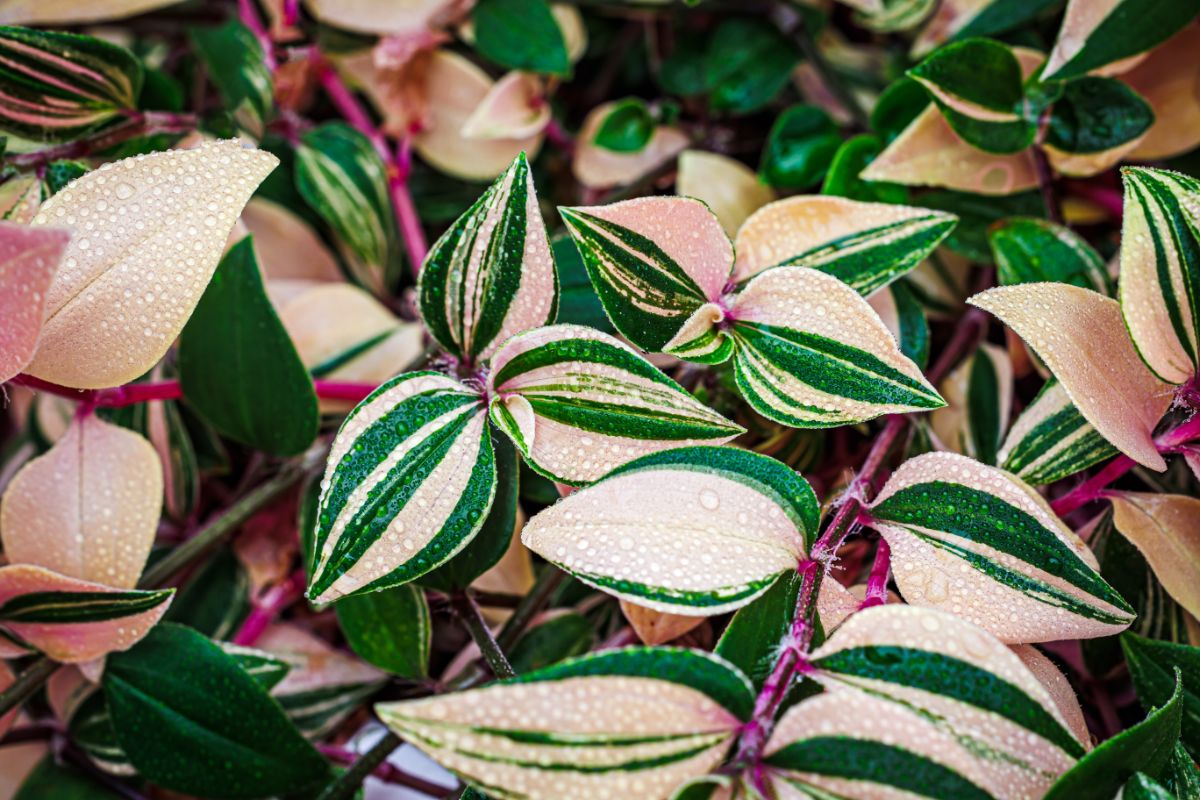
Like prayer plants, inchplants are very easy-going plants that are beginner friendly. Inchplants are semi-succulent houseplants with colorful, striped leaves in green or purple with silver accents. Their long and trailing growth habit looks striking in hanging baskets, but they also make excellent tabletop plants too.
Rattlesnake plant
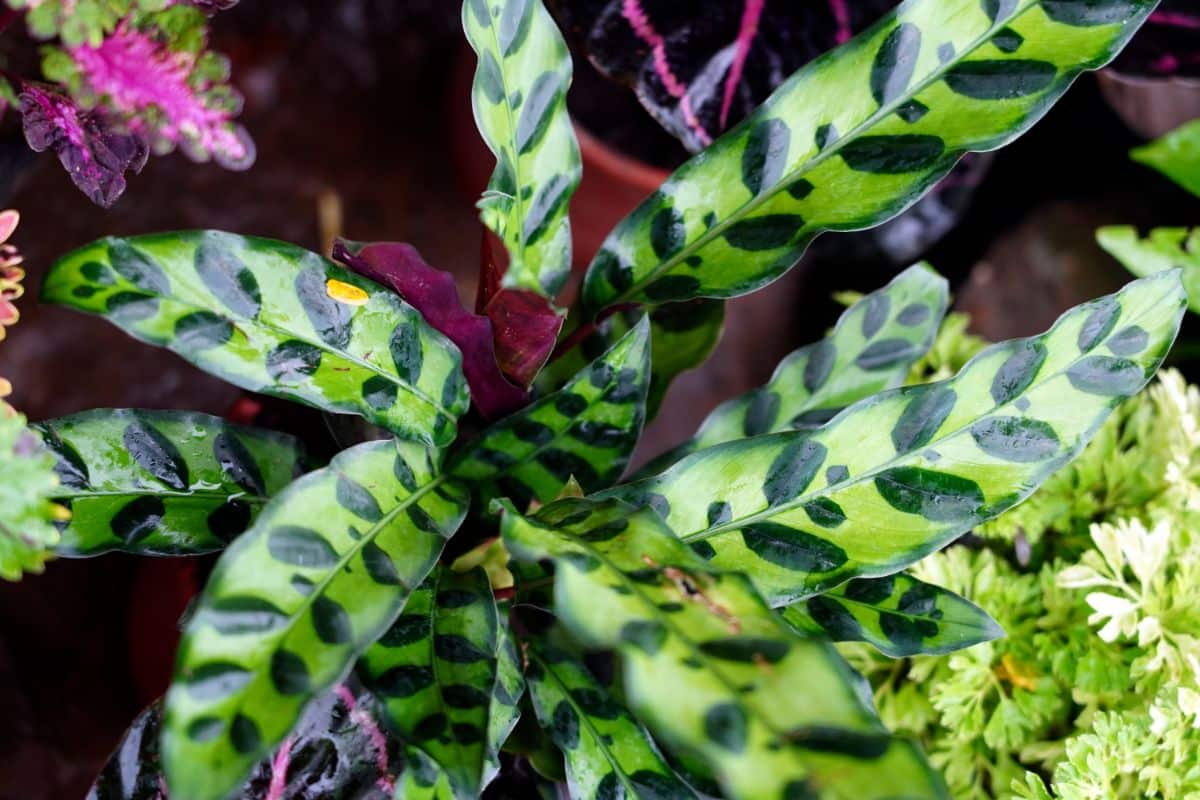
With just one look, you can tell that rattlesnake plants are closely related to prayer plants. Both plants have highly colored and patterned leaves. If you look at the underside of rattlesnake plant leaves, you’ll notice that they are colored in a vibrant, magenta tone!
Calathea ‘Network’
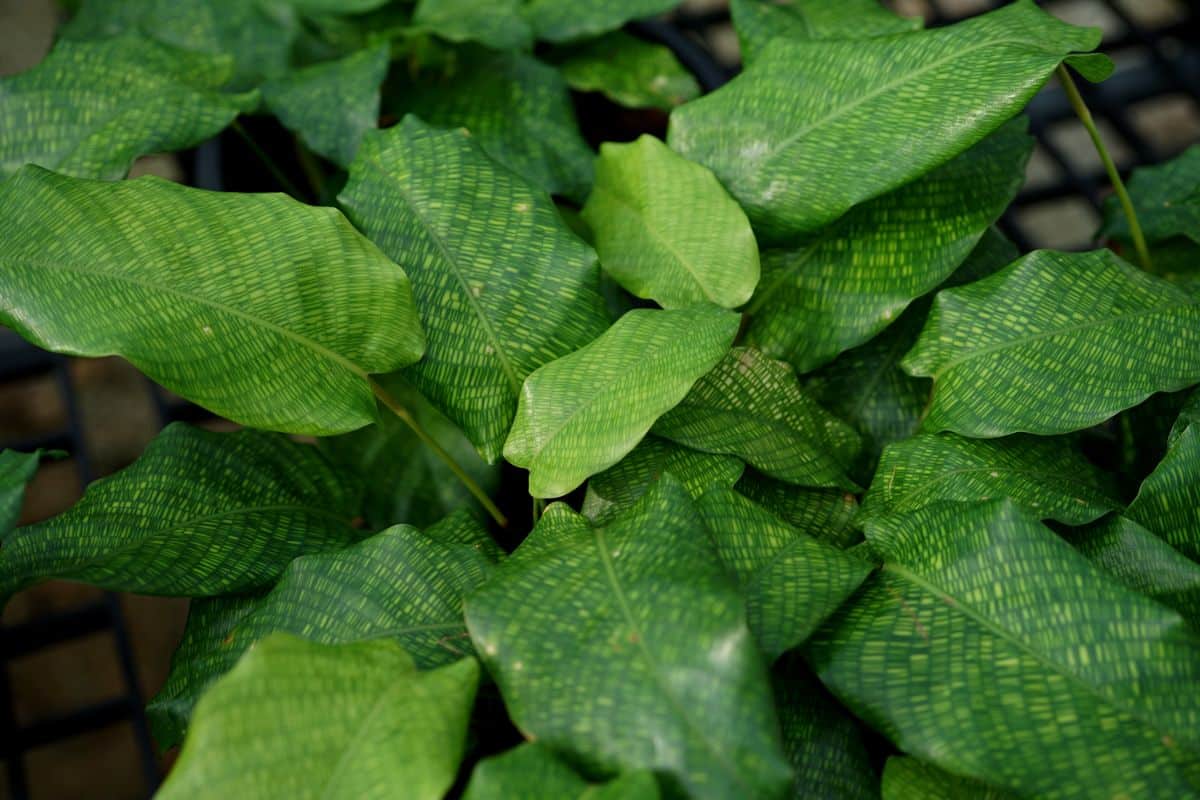
Another relative of prayer plants, Calathea ‘Network,’ can be hard to find, but it’s worth looking for. This unique plant has highly ornamented leaves that feature a colorful mosaic pattern. When added to your houseplant collection, Calathea ‘Network’ is sure to impress.
Frequently asked questions
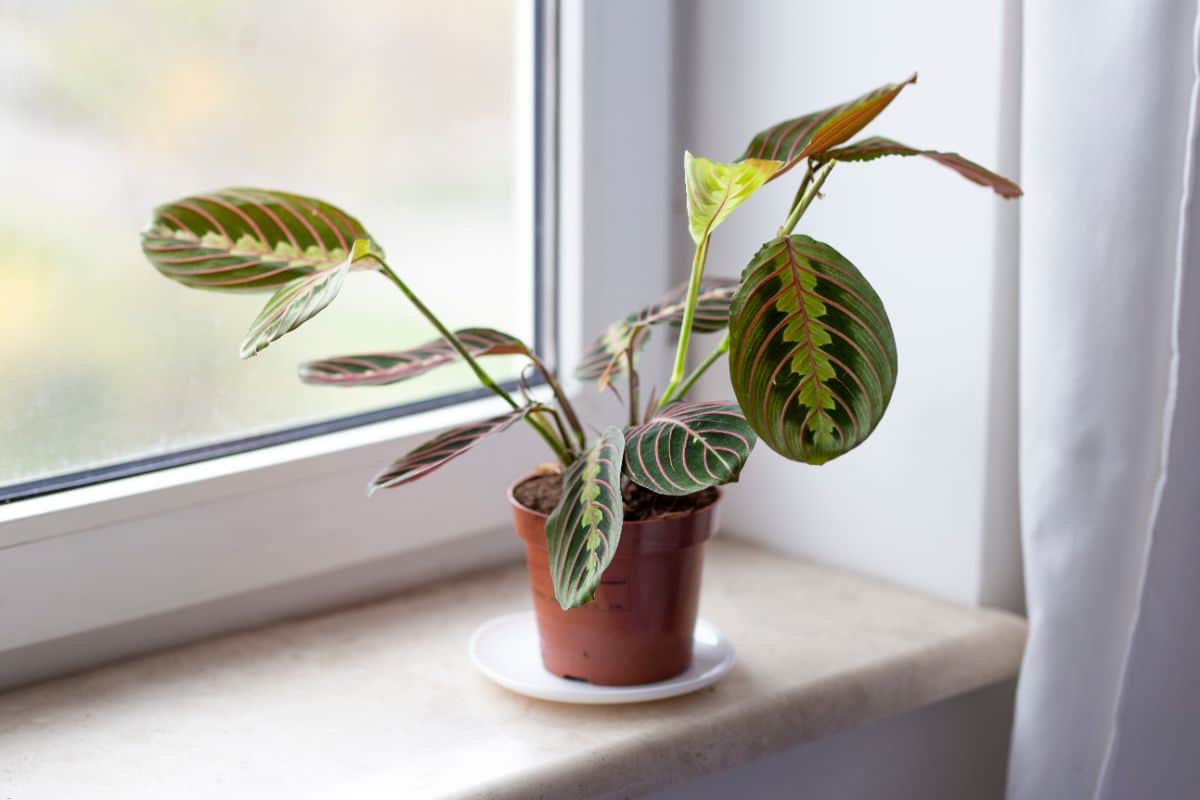
Prayer plants love extra humidity, and misting your plant can help prevent crispy leaves. However, hand misting doesn’t boost ambient humidity levels much, and you will need to mist your plant several times throughout the day to achieve the best results. Adding a humidifier or pebble tray to your setup is much easier and will help to ensure your prayer plant has enough humidity at all times.
Some tap water may contain too much salt, fluoride, or other additives that may be too much for your prayer plant. To avoid potential issues, try watering your prayer plant with distilled or rain water instead.
Prayer plant leaves turn upwards at night as a way to conserve moisture levels and keep the plant from drying out.
Yes. Brown or damaged sections of your prayer plant won’t regrow. Trimming these sections away will improve the look of your plant and will help to redirect your plant’s energy towards new growth.
When properly maintained, prayer plants will live for about 5 years. To extend the life of your plant, try propagating your prayer plant via leaf cuttings or root division.
Yes, if your bathroom receives enough light, bathrooms are excellent places for prayer plants. Your plant will appreciate the extra humidity in your bathroom and help to add color to your space too!
Summary
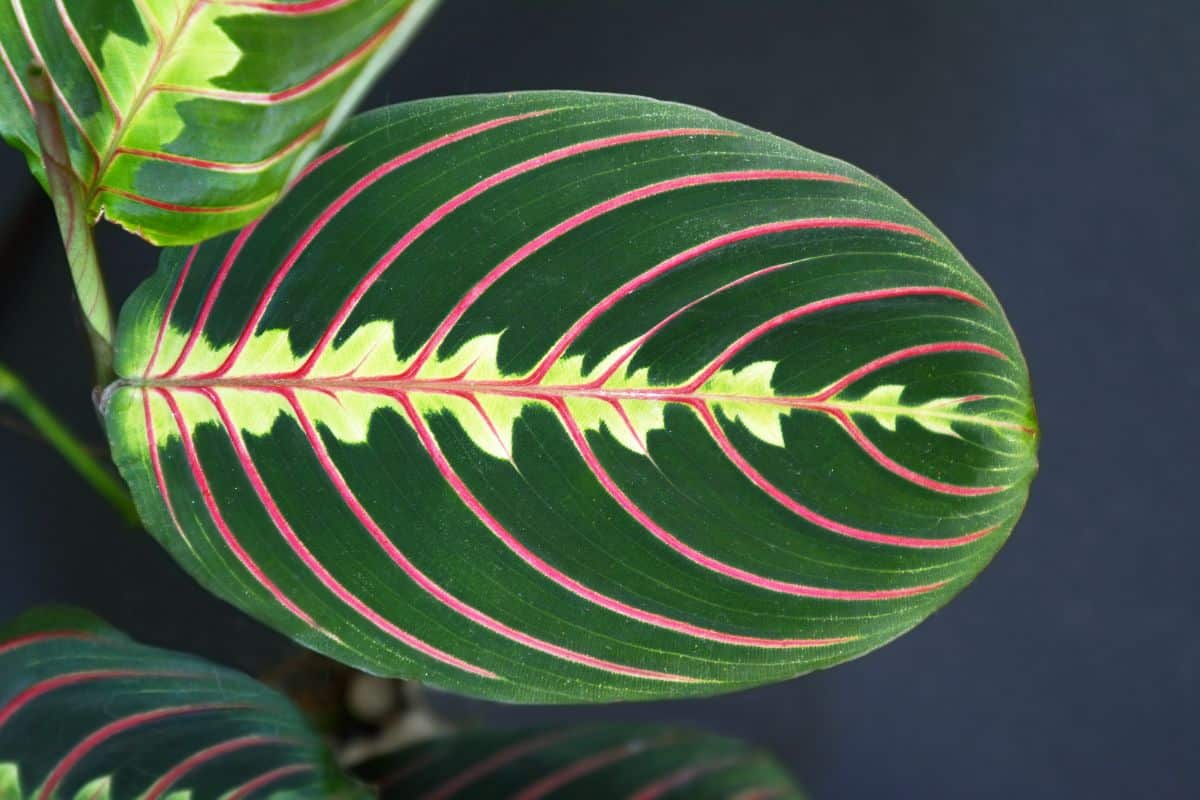
It’s no wonder why prayer plants are so popular among houseplant keepers today. These vibrant plants will add color to your houseplant collection, and they are interesting to watch as their leaves move throughout the day. They are also super easy to keep, making them just right for all houseplant keepers, no matter your skill level!
Prayer plants are one excellent houseplant choice for homes with pets, as these plants are non-toxic. If you’d like to find more pet-safe plants for your home, check out our guide here.

Leave a Reply